
Disability Support Services in Victoria: A Guide for Families and Participants
Disability support services are essential and can be life-changing, but it’s confusing to know where to start, what kinds of services are available and what makes one provider better than another, particularly if you’re not familiar with the process.
This guide explains what disability support services are, the types of support commonly available through day programs and community activities in Victoria, and how to take the next step with confidence and clarity.
What are disability support services?
Disability support services help people with disability become more independent, build skills and stay connected to their community. In Victoria, many of these support services are funded through the National Disability Insurance Scheme (NDIS).
NIDS participants do not all have the same requirements, which is why it makes sense to seek out a program that is tailored to individual needs, interests and goals. For example, one participant may be looking to develop daily living skills, while another may access disability support services to expand their social network and sense of community connection.
C2A’s disability support services are operated by caring and qualified individuals who create personalised plans to help participants:
- Build independence and life skills
- Connect with others and form meaningful relationships
- Work towards personal goals at their own pace
- Explore the local area and engage in activities they enjoy
Support can be delivered one-on-one or in small groups. It may take place at a dedicated support hub, out in the community, or through a combination of both. What matters most is that the service is person-centred and aligned with what the participant wants to achieve.
Types of support available through day programs and community activities
One of the most common and flexible forms of disability support is participation in day programs and community-based activities. This is often funded under NDIS categories such as Assistance with Social and Community Participation or Capacity Building.
Day programs
Day programs provide structured, supportive environments where participants can build skills, confidence and social connections while doing activities they enjoy. Programs are designed to support different interests and abilities, and participants usually have flexibility around how often they attend.
Examples of day program activities include:
- Life skills development such as cooking, using computers or catching public transport
- Creative activities like art, music or craft
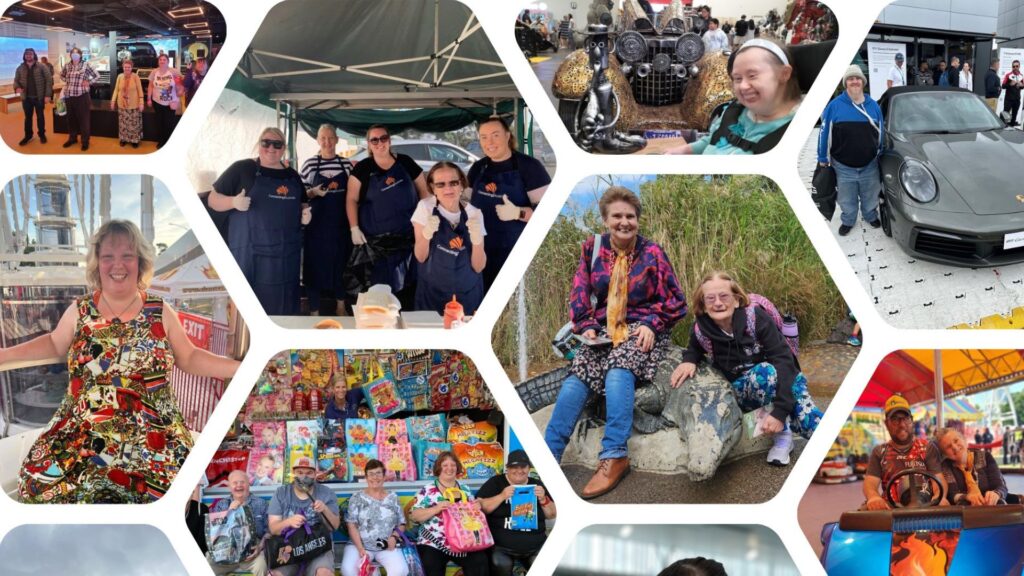
- Group outings and local excursions
- Health, wellbeing and movement-based activities
- Social groups that encourage teamwork and friendships
Each day is deliberately planned to allow participants to explore new interests and build skills at their own pace.
Read more: How NDIS Day Programs in Victoria Work Alongside Your NDIS Plan
Community activities
Community-based supports focus on helping participants feel confident and capable in everyday environments. These supports are about getting out into the community and building independence through real-life experiences.
This might include:
- Attending community events, classes, or workshops
- Visiting local cafés, libraries, or recreational spaces
- Exploring volunteering opportunities at Op Shops
- Building confidence in social settings
Staying busy is not the only purpose of these activities. Having the feeling of inclusion, connection, and support to participate meaningfully in the local community is the goal of these programs.
Find out more by visiting C2A’s Day Programs and Support Services page.
How to choose a disability support provider in Victoria
When exploring disability support services and day programs, it can help to look at:
- Choice and flexibility: Can participants choose activities that match their interests and goals?
- Participant-centred support: Are supports tailored to the individual rather than a set program for everyone?
- Clear communication: Does the provider explain services, funding, and options in a way that is easy to understand?
- Safe and welcoming environments: Do participants feel respected, comfortable, and supported?
- Local knowledge: Are services available in your area, with staff who understand the local community?
- Provider staff: Does the provider have long-term staff who enjoy building relationships or a high rotation of casual agency staff?
- Qualifications: Does the provider offer trained and qualified disability support workers who are backed by a clinical governance team?
The decision you make will go a long way to ensure you or your loved one feels heard, valued and safe while in the care of a disability support provider.
Explore C2A’s disability support services
C2A offers disability support services that are inclusive, flexible and participant-led. With hubs located across Victoria, our team works alongside individuals and families to deliver well structured, safe and tailored support services and community programs that cater for particpants’ personal goals, interests and needs.
Whether you are just starting your NDIS journey or looking to switch to a provider that puts participants first, C2A’s team is there to support you every step of the way. Call 1300 111 212 or contact us here.